The average person generates roughly 4.5 pounds of trash every single day. Multiply that across a single household over a year, and the environmental footprint becomes staggering. When confronted with global climate data, it’s easy to feel paralyzed by the scale of the problem.
However, achieving a low-waste home doesn’t require a radical, overnight lifestyle overhaul. True sustainability is built on small, repeatable daily habits. If you are wondering how to reduce household waste without turning your life upside down, here are five highly practical, low-friction strategies you can implement this week.
1. Audit Your Trash (The 5-Minute Baseline)
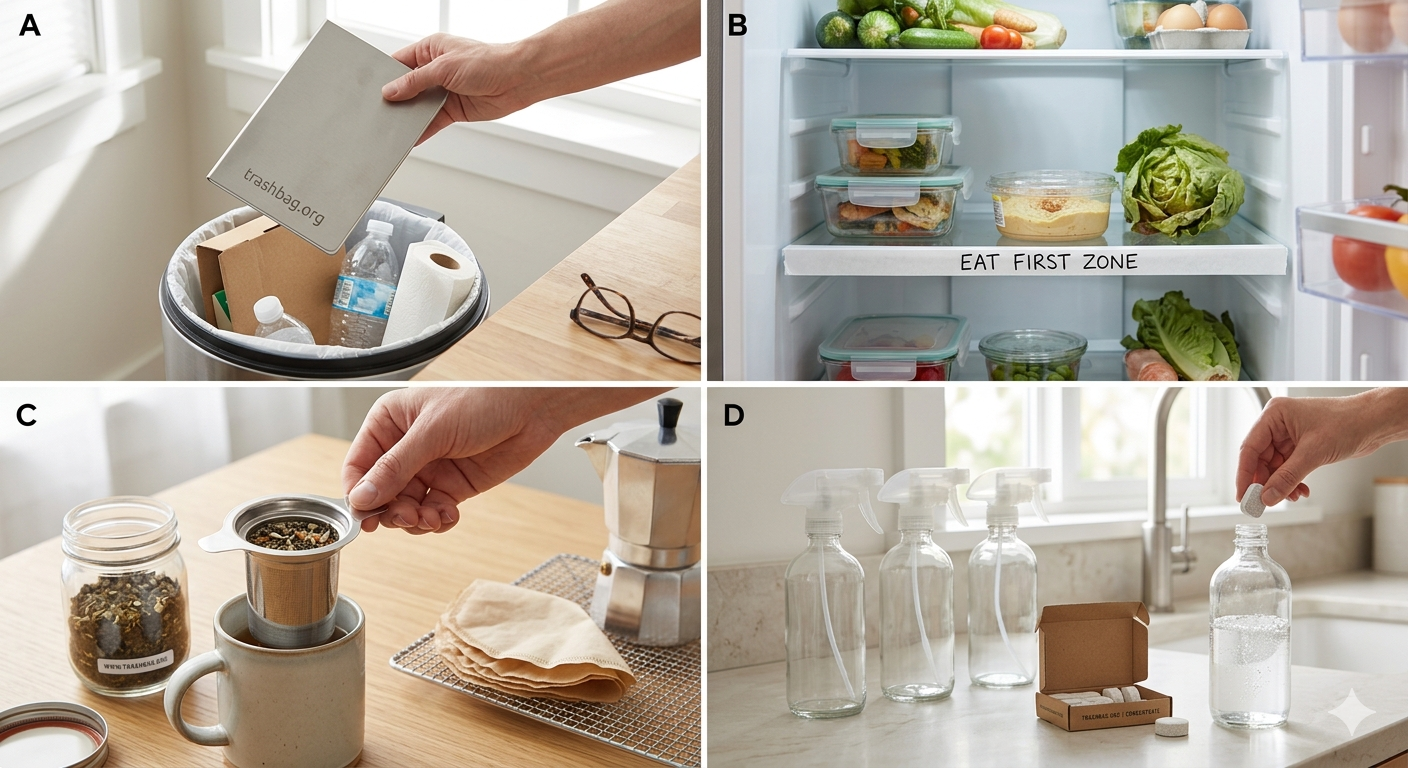
Before you can change what you throw away, you need to understand what you’re discarding. You don’t need a complex spreadsheet—just take a conscious look into your primary trash bin before taking it out to the curb.
-
Identify the Dominant Material: Is your bin filled mostly with single-use plastic packaging, food scraps, or paper mail?
-
Target the Easy Wins: Pick the single most common item (for example, plastic water bottles or paper paper towels) and commit to replacing just that one item this month.
2. Master the “First In, First Out” (FIFO) Food Method
Food waste is a massive contributor to household trash and global methane emissions. Most kitchen waste doesn’t happen because we don’t care; it happens because we forget what we bought.
Borrow a trick from professional commercial kitchens: the FIFO (First In, First Out) method.
Kitchen Lifehack: Dedicate one specific shelf in your refrigerator at eye level as the “Eat First” zone. When unpacking groceries, move older produce, leftovers, and opened condiments to this shelf. Before cooking or ordering takeout, check this shelf first to eliminate accidental spoilage.
3. Rethink Your Coffee and Tea Rituals
Your morning caffeine routine can be a hidden hotspot for daily waste. Traditional single-serve coffee pods, disposable paper filters, and even conventional tea bags (which frequently contain microplastics that prevent them from decomposing) add up rapidly over 365 days.
| The Old Way | The Low-Waste Alternative | Environmental Benefit |
| Single-use coffee plastic pods | Reusable stainless steel pods | Eliminates non-recyclable plastic pods from landfills. |
| Bleached paper coffee filters | Reusable organic cotton or mesh filters | Reduces paper manufacturing demand and chemical bleaching runoff. |
| Plastic-lined commercial tea bags | Loose-leaf tea with a stainless steel infuser | Eliminates microplastic shedding and provides clean, compostable tea leaves. |
4. Set Up a Micro-Composting Corner
Food scraps and organic matter account for nearly 30% of what we throw away. When buried tightly in a landfill without oxygen, this organic material decomposes anaerobically, releasing harmful greenhouse gases.
You don’t need a massive backyard to compost. Micro-composting allows apartment dwellers and urban homeowners to divert organic waste easily:
-
The Freezer Method: Keep a sealed, stainless steel bin or silicone bag in your freezer to collect vegetable scraps, coffee grounds, and eggshells. Freezing completely eliminates odors and fruit flies.
-
Drop-Off Sites: Once the bin is full, empty it at a local community garden, farmers’ market, or a municipal organic drop-off hub.
5. Transition to Concentrated Refills
Think about the household cleaners under your sink right now: dish soap, laundry detergent, window cleaner, and hand soap. Most of these commercial products are composed of up to 90% water packaged in heavy, single-use plastic jugs. You are essentially paying to ship water across the globe inside plastic that will outlive you.
Switch to a shatterproof bottle + concentrate model. Buy high-quality reusable glass or aluminum spray bottles once, then purchase small, concentrated refill tablets or liquid pouches. You simply drop the concentrate into your bottle at home, fill it up with tap water, and shake. You get the exact same cleaning power while eliminating bulk plastic waste entirely.
Consistency Over Perfection
The goal of reducing household waste isn’t to fit an entire year’s worth of trash into a single mason jar. That standard is unrealistic for the vast majority of busy households. Instead, focus on making continuous, incremental adjustments. By swapping out one single-use habit at a time, you contribute to a massive, collective global reduction in landfill waste.